
Minecraft on Rift Mostly Avoids the Usual First-Person VR Mistakes
Many other gamers in my age group were hooked during the Super Nintendo/Sega Genesis era, while the older crowd are likely to have the original NES in their hearts. Some might even cite the original Atari 2600 as their first step into the world of gaming, with their reverence for the medium enduring even the colossal gaming crash of the 1980’s. On the other side of things, we have younger gamers who are being raised on Playstation consoles as new as the Playstation 4 and even Microsoft’s Xbox line, which didn’t appear until the new millennium. We also mustn’t forget those of us who played PC games during our childhood, even the consistently ridiculed edutainment games like Oregon Trail II . We’re all given so much history and so many options to choose from as fans within this medium, but those of us who call ourselves gamers find something truly fascinating with games as a whole.
The Classic Control is what you’d normally put up with in a standard FPS, where head movement moves the view and body orientation is controlled smoothly by the right stick or mouse. This is the heart of the VR FPS problem, because while moving forward, back, and strafing isn’t much of an issue, turning the view without moving your body is when bad things start to happen at the base of your lizard brain. Even in a blocky Minecraft world the sense of Real is too strong, and while you know you’re playing a game the part that keeps things like your heart pumping and lungs breathing without conscious thought hasn’t the slightest idea what’s wrong. The trick is to break the idea of Real, and this is where the special VR Control mode comes into play.
 The episode doesn’t stop there, because once you’ve returned from either of those two paths, you head off as a group with whichever other character you picked up in the first episode (Lukas for me) to find the last member of the Order of the Stone, Soren the Architect. This path also follows a relatively fast-paced action sequence, but falls a little short with its sub-par cliffhanger. It’s only episode two, but the weird events surrounding the Order of the Stone and exactly what they’re Going to Www.mcversehub.com to do to stop this crazy Wither Storm seems as though it will never be resolved.
The story also deserves notice. Minecraft itself might not have as intense of a story, but Telltale was able to grab some of the more important factors of Minecraft and create a lore to follow and better understand what the characters with. Previously, your goal was to mine for enough materials and minerals to make a portal to the End to slay the Ender Dragon. Now, that story doesn’t necessarily apply to everyone, because the ones who slayed the Ender Dragon were the members of the Order of the Stone. The members are essentially the people that you would have normally gone to the End with to help you fight the dragon, so it almost makes it seem like you were some kind of legendary hero for being able to do that if you were able to do so in the past. Everyone else in the episode doesn’t have that same goal and, funny enough, don’t look at all like the villagers that you sometimes wander upon in the original game. The storytelling and characters leave you with enough of an impression that leaves you waiting in anticipation for the next episode. You begin to make connections with your friends and build a relationship with them in the span of one single episode so it leaves you wanting to know what will come next for this party of builders.
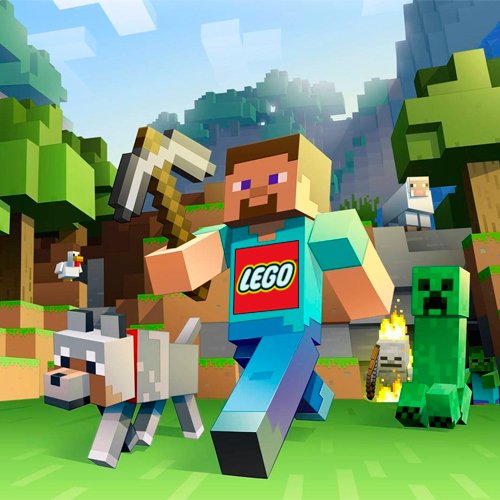
The are two reasons getting this right is important, and both reasons are the same but viewed from different perspectives- Minecraft is still the biggest game in the world. The official VR mode is exclusive to the Rift, so you can bet that Microsoft/Mojang and Oculus worked together to make sure the experience is as inviting as possible. Getting this right is a major deal for both companies. This ties in to the other perspective, which is consumer-side. For a lot of people Minecraft will be a premier game for VR, and how accessible it is will become the baseline expectation of the experience. Make it nice and maybe it becomes the VR gateway drug, and at the moment the experience is acceptable. The default starting view may be the same Minecraft as always on an in-game screen, and Classic Control has high nausea potential, but the jerky VR Control is the kind of thing you learn to tolerate simply because it’s effective.
Even people who passed on gaming in their youth are able to experience that same magic in their adulthood with more mainstream successes like Wii Sports . In fact, this demographic, a group who likely passed on the gaming world as kids, are now realizing a fresh new perspective. They get to see different elements of game design that they might have ignored back then, making the evolution of the medium and the broadening of the market a much more appealing prospect. Specifically, that big moment where a “virgin” gamer (regardless of age) is finally able to have fun when playing a game is a sense of purity and epiphany. It’s all about having fun. As we get more involved in the medium, we begin to take sides. We begin to favor consoles or developers. We begin to look at games with the minds of cynical and judgmental critics. Even as kids, we’d argue at the lunch table as to whether Sega or Nintendo is better, but if you rewind just a few years before that, you didn’t even care who made the console. Perhaps it was the catchy level themes that you remember the most or maybe it’s some iconic environmental hazard that sticks in your mind. Maybe it was similar to my case where it was just the character’s expressive personality that encouraged me to pick up a controller and actually control the character. The moments of realization and involvement vary for everyone, but as fresh faces in the gaming community, we’re never forced to pick a side. We are clean slates for series to enthrall and characters to enlist, and our focus was precisely on the game itself and those subtle moments of appeal.